LEARNING TO SURF VS. KITESURF VS. WINGFOIL: WHICH WATERSPORT SHOULD YOU CHOOSE?
The ocean has never been busier with adventure seekers chasing waves and wind. Whether you are dreaming about paddling into your first green wave, flying across a lagoon powered by a kite, or silently foiling over the water holding a wing, there has never been a better time to try a new boardsport.
This guide breaks down surfing, kitesurfing, and wingfoiling — their pros and cons, learning curves, gear costs, and what type of rider each sport suits best. If you have been searching for a boardsport retreat or wondering whether a surf retreat, learn kitesurfing course, or wingfoil holiday is right for you, this is your no-nonsense comparison.
QUICK COMPARISON
Surfing: Low gear cost, needs waves, moderate learning curve, weeks to months to ride confidently.
Kitesurfing: Higher gear cost, needs steady wind, steep but short learning curve, most people ride independently within a few days.
Wingfoiling: Medium-high gear cost, needs moderate wind and deep water, challenging for beginners but rewarding once mastered.
| Surfing | Kitesurfing | Wingfoiling | |
|---|---|---|---|
| Gear Cost | Low (€300–€600) | High (€2,200–€3,500) | Medium-High (€1,800–€3,000) |
| Learning Curve | Moderate — 5 to 10 sessions | Steep but quick — 6–12h lessons | Steep but quick — 6–12h lessons/td> |
| Required Conditions | Waves (waist-high) | Steady 12–25 knots wind | 8 to 20 knots wind + deep water |
| Where | Ocean | Ocean or big lake | Ocean or any lake |
| Physical Demands | Paddling endurance, mobility | Legs + core strength | Balance + core stability |
| Travel with gear | Not too easy | Easy | Medium |
| Risk level | Low | Medium | Low |
WHAT EACH SPORT INVOLVES
SURFING
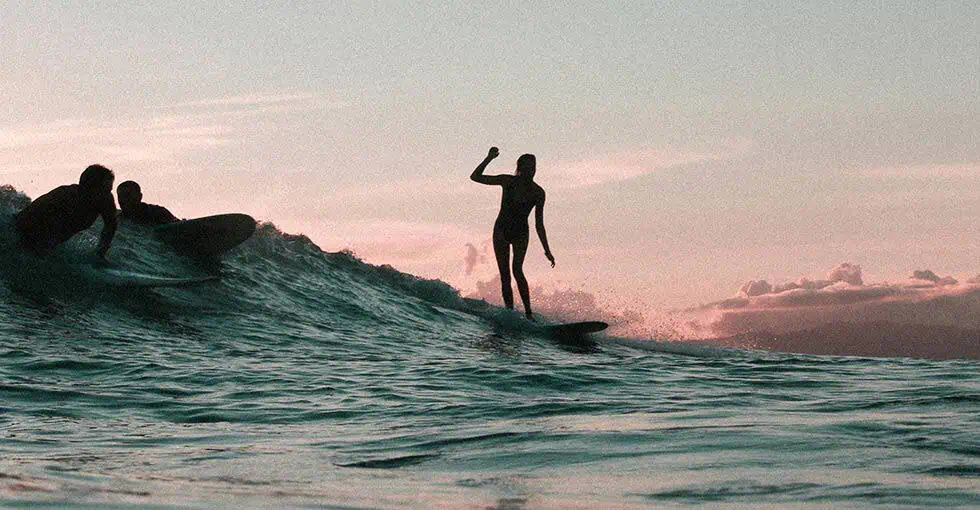
Surfing is the most iconic of the three. You paddle out, catch unpowered waves, and ride them using only your board.
Gear needed: Beginners start with soft-top longboards. You may need a wetsuit depending on water temperature.
Ideal conditions: Consistent waist- to chest-high waves.
KITESURFING (KITEBOARDING)
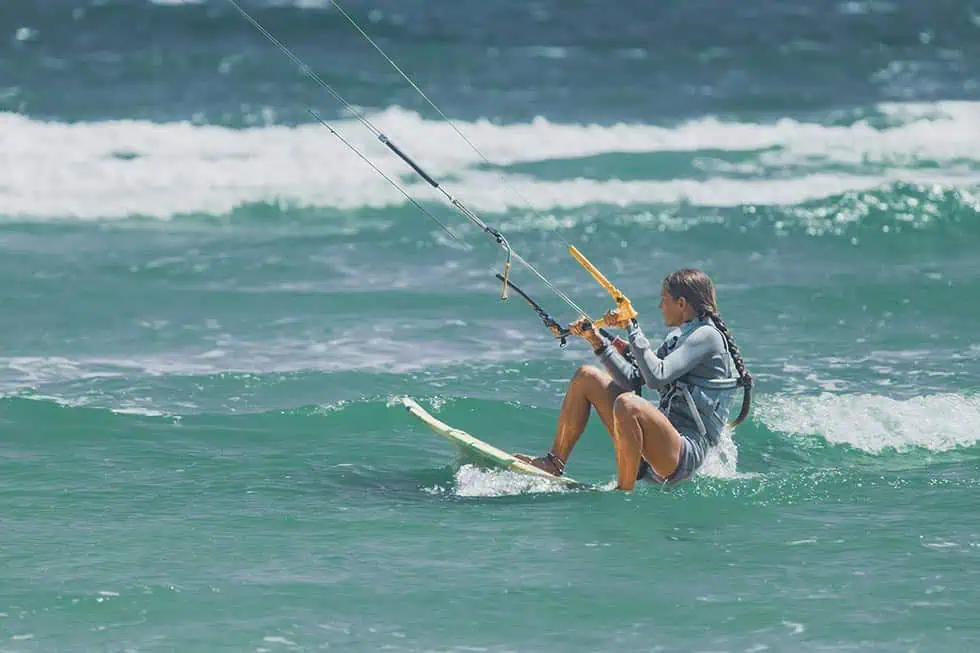
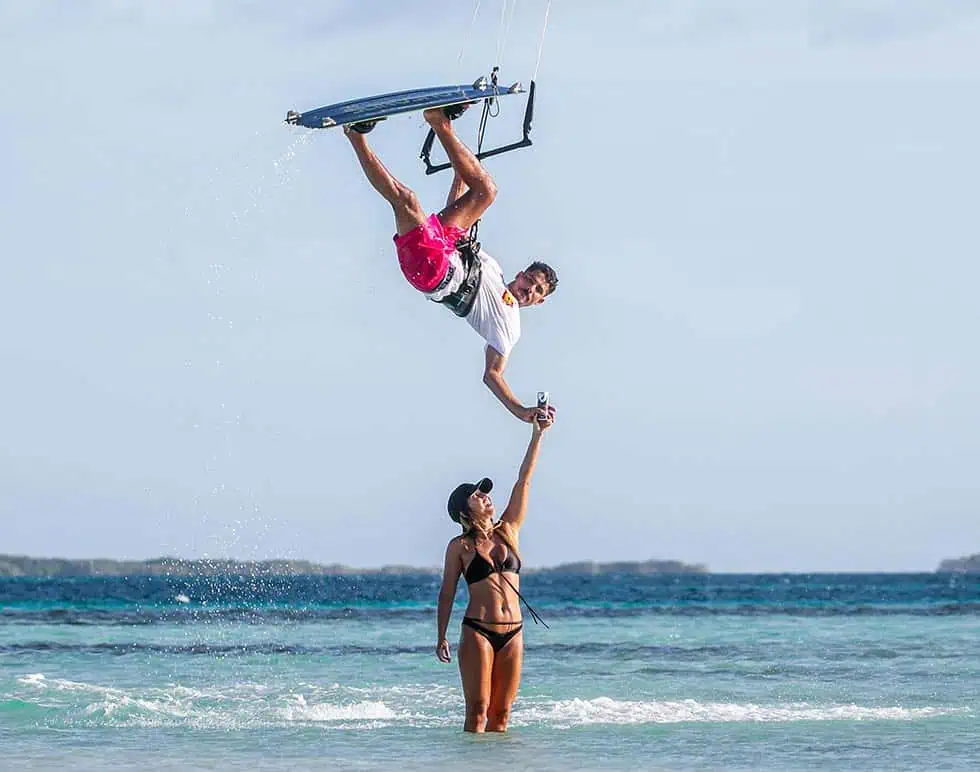
Kitesurfing uses a large inflatable kite to pull you across the water on a board — either on flat water or in waves.
Gear needed: Kite, bar and lines, harness, board, and a safety system.
Required conditions: Steady side-shore wind, ideally 15–20 knots. Flat water lagoons are best for learning.
Lessons are essential to learn kite control, water starts, and self-rescue safely.
WINGFOILING
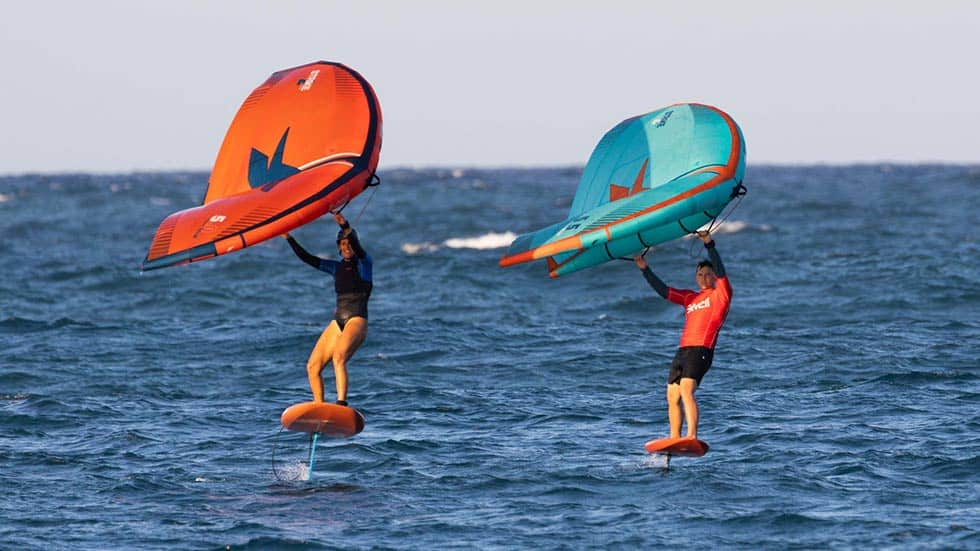
Wingfoiling combines a hand-held wing and a hydrofoil board. Once you get up on the foil, you glide almost silently above the water.
Gear needed: Inflatable wing, hydrofoil board, pump, helmet, and sometimes an impact vest.
Best conditions: 12–25 knots of wind and at least one meter of water depth.
A wingfoil holiday is a great choice if you like freedom and minimal gear hassle.
LEARNING CURVE AND TIME INVESTMENT
Surfing requires patience. Expect a few days just to stand up consistently and weeks before linking turns. Ocean knowledge is important.
Kitesurfing riders usually go downwind after 6–12 hours of lessons. Once kite control clicks, progress is quick.
Wingfoiling is fastest for kitesurfers, windsurfers, or SUP riders. Total beginners should plan several sessions to balance on the board and handle the wing confidently.
SAFETY CONSIDERATIONS
Surfing: Respect right of way, watch for rips, and never ditch your board in a crowded lineup.
Kitesurfing: Launch and land only in safe zones, avoid offshore winds, and know self-rescue techniques.
Wingfoiling: Foil wings are sharp — wear a helmet and consider an impact vest.
Lessons with certified instructors are recommended for all three sports.
FITNESS LEVEL AND ACCESSIBILITY
Surfing is a full-body workout with lots of paddling. Kitesurfing relies on technique and is accessible even if you are not very strong. Wingfoiling requires balance and core stability but is low-impact once you are up and riding.
All three sports are possible for kids and older learners with proper instruction.
GEAR AND COST BREAKDOWN
Surfing: Soft-top board around €250–€400, leash, wetsuit if needed.
Kitesurfing: Complete setup starts around €2,500.
Wingfoiling: Full package €2,500 depending on foil quality.
Surf retreats and kite camps allow you to rent before investing in your own gear.
LOCATIONS AND TRAVEL CONSIDERATIONS
Surfing needs consistent waves, kiting and wingfoiling need reliable wind. Cabarete in the Dominican Republic offers all three — waves, wind, and flat-water lagoons.
Travel-friendly gear matters: surfboards are bulky, kites pack small, wings even smaller.
Check the best time to visit Cabarete guide for ideal seasons.

PROGRESSION AND LIFESTYLE
Surfing evolves from longboarding to shortboard tricks. Kiting has freestyle, wave, and foil styles. Wingfoiling now has racing and downwind disciplines. Each sport has its own culture and community, giving you a lifestyle as much as a hobby.
WHICH SPORT IS RIGHT FOR YOU?
Consider where you live, your budget, how much time you have to practice, and whether you like speed, gliding, or paddling. Surfing is for those who love connecting with the ocean. Kitesurfing suits those who want power and speed. Wingfoiling is perfect for freedom lovers who want to try something new.
QUICK QUESTIONS
CONCLUSION
You do not have to choose just one. Many guests at Swell Active start with surfing and later try kiting or wingfoiling to make the most of all conditions.
Join us for a surf retreat or book kiteboarding lessons or a wingfoil holiday. We will set you up with instructors, gear, and the right conditions.