wingfoiling
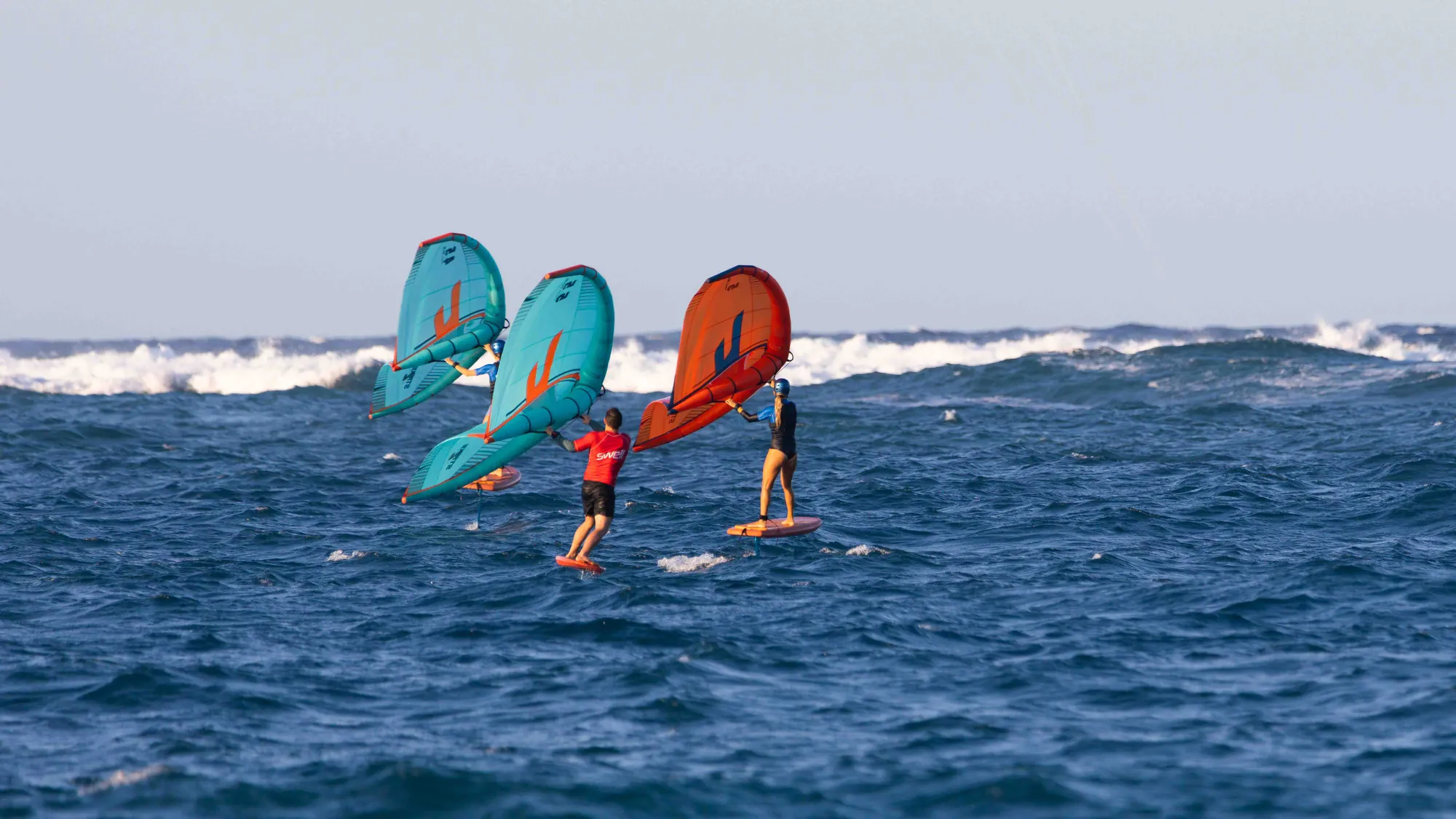
A learn-to-wingfoil retreat in one of the best places on earth to start: warm, flat water, reliable side-shore trade winds, and coaching that takes a complete beginner from the beach to flying on the foil in a single week. This is the full picture — the conditions, the method, the gear, and exactly how your week unfolds.
Wingfoiling is the fastest-growing sport on the water, and for good reason. You hold a light, inflatable wing in your hands and stand on a board fitted with a hydrofoil; as you build speed, the foil lifts the board clear of the surface and you glide, almost silently, above the water. Because the wing isn’t fixed to the board like a windsurf rig, and isn’t tethered to you on long lines like a kite, it’s the gentlest and safest way onto a foil there is. Let go, and the wing simply drops. That single design difference is why an adult beginner can realistically learn on a week’s holiday rather than over a whole season at home.
Why Cabarete is one of the best places to learn to wingfoil
Where you learn decides how quickly it clicks — more than talent, fitness or age. The single biggest factor is wind quality: steady, predictable, side-shore wind over flat water. Gusty wind that surges and drops can multiply the time it takes to learn; offshore wind that blows out to sea is simply unsafe. Cabarete, on the north coast of the Dominican Republic, is built for the good version.
The trade winds fill in almost every afternoon and blow side-shore — along the beach, never out to sea — so a mistake drifts you down the coast, not into open water. Cabarete Bay gives you a large, flat, shallow lagoon a few minutes’ walk from us: the ideal nursery for your first sessions. When you progress, the reefs on the outside and nearby Encuentro open up clean waves to ride with the foil, and long downwinders between spots. The water is warm enough year-round to fall into in boardshorts — and you will fall in, which is exactly why warm water matters.
The numbers that make it work
You need only around 12 knots of wind to get up and ride on the foil. Most months of the year we see at least 15 to 20 days with that or more, so finishing the roughly eight-hour beginner course inside a five-to-seven-day week is very achievable. The strongest, steadiest wind runs February to April and June to August; June and July also bring the flattest water. The one window we’d steer you away from is mid-September to mid-October, when passing storms make the wind unreliable.
How you’ll learn: the Swell method
You progress in clear, deliberate stages, coached one step at a time, on kit sized to the day and to your ability. Nobody hands you a wing and points at the sea. A typical learn-to-wingfoil week moves like this.
- Wing handling on landFly the wing on the beach to learn the power window, neutral and depower — the muscle memory that makes everything after it easier.
- On the board, in the waterOnto a big, stable board to get comfortable moving across the flat water with the wing, before the foil comes into play.
- First flightsGet the board-and-wing combination working, feel the foil begin to rise, and experience your first short flights above the water.
- Riding both waysSustained flights in one direction, then the other — the moment you’re officially a wingfoiler.
- Going upwindLearning to ride back upwind to where you started: the skill that makes you genuinely independent on the water.
Most people master the basics of wingfoil flight in around eight hours of lessons, spread across the week so your body has time to absorb each stage. The conditions do half the teaching — reliable wind and flat, warm water remove the two things that make learning elsewhere so slow and frustrating. If you’d like the full explainer first, our journal guide to planning a wingfoil holiday walks through what to expect in detail.
The equipment — all provided
A full quiver lives on site, and your coach sizes it to the day’s wind and to you, session by session. There’s nothing to buy and nothing to lug through an airport — a real advantage when a complete beginner setup costs well over a thousand dollars before you’ve had a single lesson.
- Inflatable wings across the full size range, matched to the wind
- High-volume beginner boards for stability, sized to your weight
- Forgiving, low-speed foils that lift early and ride steady
- Helmet and impact/flotation vest — worn by everyone, every session
- Leashes and safety kit, checked before you go out
- Smaller boards and higher-performance foils as you progress
Coaching for every level
We teach a wide range of abilities, and group you so lessons move at the right pace for where you actually are.
Never tried it
Most of our guests. No watersport background needed — a blank slate can make it easier. We start you on the sand and build from there.
Some board experience
Surfed, kited or windsurfed before? The balance and wind-sense transfer, and you’ll often reach first flights faster.
Already foiling
Improvers welcome. Refine your flight, your transitions, riding upwind, and getting onto waves with the foil.
Safety on the water
A foil demands respect, and we build the right habits from the first day. Every session starts with a beach briefing; everyone wears a helmet and an impact/flotation vest — beginners and advanced riders alike. You’ll learn self-rescue, right-of-way and kit checks as part of the course, not as an afterthought. The side-shore wind, the flat lagoon and constant coach supervision mean you’re learning in about the safest setup wingfoiling offers.
When to come: wind by month
Most of the year works well; a couple of windows stand out, and one is best avoided. Climate patterns are shifting, so treat this as a strong guide rather than a guarantee.
| Months | Wind | Water | Best for |
|---|---|---|---|
| Feb – Apr | Strong & steady | Good | The most reliable learning wind |
| Jun – Aug | Steady | Flattest | Beginners; the calmest lagoon |
| May & early Sep | Variable | Good | Quieter weeks, smaller groups |
| Mid-Sep – Mid-Oct | Hit or miss | Variable | Best avoided (storm season) |
| Nov – Jan | Mixed | Good | A warm winter escape with windy spells |
What’s included
One all-in price, no surcharges at checkout. Here’s what your wingfoil week covers.
- Daily wingfoil coaching, graded to your level
- All equipment — a full quiver, sized to the day
- Boutique ensuite accommodation on the coast
- Home-cooked breakfasts and several dinners
- Return Puerto Plata (POP) airport transfers
- Full use of the property between sessions
See the current week’s rates and the complete list of inclusions on the pricing page.
Clare Mutsaars, Swell Active co-founder
Make it a surf-and-wing week
The trades arrive after lunch, so your mornings are free. Plenty of guests start the day with a surf while the water’s glassy, then wingfoil once the wind fills in — two sports in one week, coached around the day’s conditions. It’s the ultimate action-packed watersport holiday.
Where you’ll stay
Boutique ensuite rooms, a communal hub and home-cooked meals a few minutes from the beach — built for adults who want comfort and company, not a dorm.
Getting here
Fly into Puerto Plata (POP), a 30 to 40 minute transfer from us, included both ways. There are direct flights from much of the US east coast and Canada — New York, Boston, Toronto and more — which is exactly why so many of our guests come from there. No rental car needed: the lagoon is a short walk, and everything else is close.
Who comes on a wingfoil retreat
Wingfoiling is accessible to most people from around age ten to seventy, and doesn’t demand great strength — the wing is light in the hand and depowers instantly. Most of our guests arrive as complete beginners, many with no board-sports background at all, and a large share travel solo. The crowd skews to working adults after an active reset rather than a party, so shared meals and the communal hub mean nobody stays a stranger past the first morning.
Ready to fly?
Tell us your dates and how many of you are coming, and a real person will send a custom price and availability quote — usually within the day.
Wingfoil retreat FAQ
Can a complete beginner really learn to wingfoil in a week?
Yes — most of our wingfoil guests start with zero experience. With steady wind, flat water and one-to-one coaching, the roughly eight-hour beginner course fits comfortably into five to seven days, and most people are riding on the foil by the end of the week.
Do I need any watersport experience?
No. Plenty of guests come to winging with no board sports at all, and a blank slate can actually make it easier. If you’ve surfed, kited or windsurfed before, the balance and wind-sense transfer and you may progress a little faster.
How much wind does wingfoiling need?
Around 12 knots to get up and ride on the foil — less than kitesurfing or windsurfing. Cabarete’s afternoon trade winds deliver that on most days of the year, and they blow side-shore, which is the safest, most learnable direction.
Do I need to bring my own gear?
No. A full quiver of wings, boards and foils is on site and sized to you and the day’s conditions, along with helmet and impact vest. There’s nothing to buy and nothing to carry through an airport.
Is there an age limit?
Not really. Winging is light on the body and the wing depowers the moment you let go, so we teach a wide range of ages. Confident swimming and reasonable fitness matter far more than youth.
Can I combine wingfoiling with surfing?
Yes, and many guests do. Surf in the morning when the water is cleanest, then wingfoil in the afternoon when the trade winds arrive — one action-packed week, two sports, coached around the conditions.
What’s the best time of year to come?
February to April and June to August bring the steadiest wind, with June and July offering the flattest water for beginners. Mid-September to mid-October is best avoided due to unreliable storm-season wind.