surfing
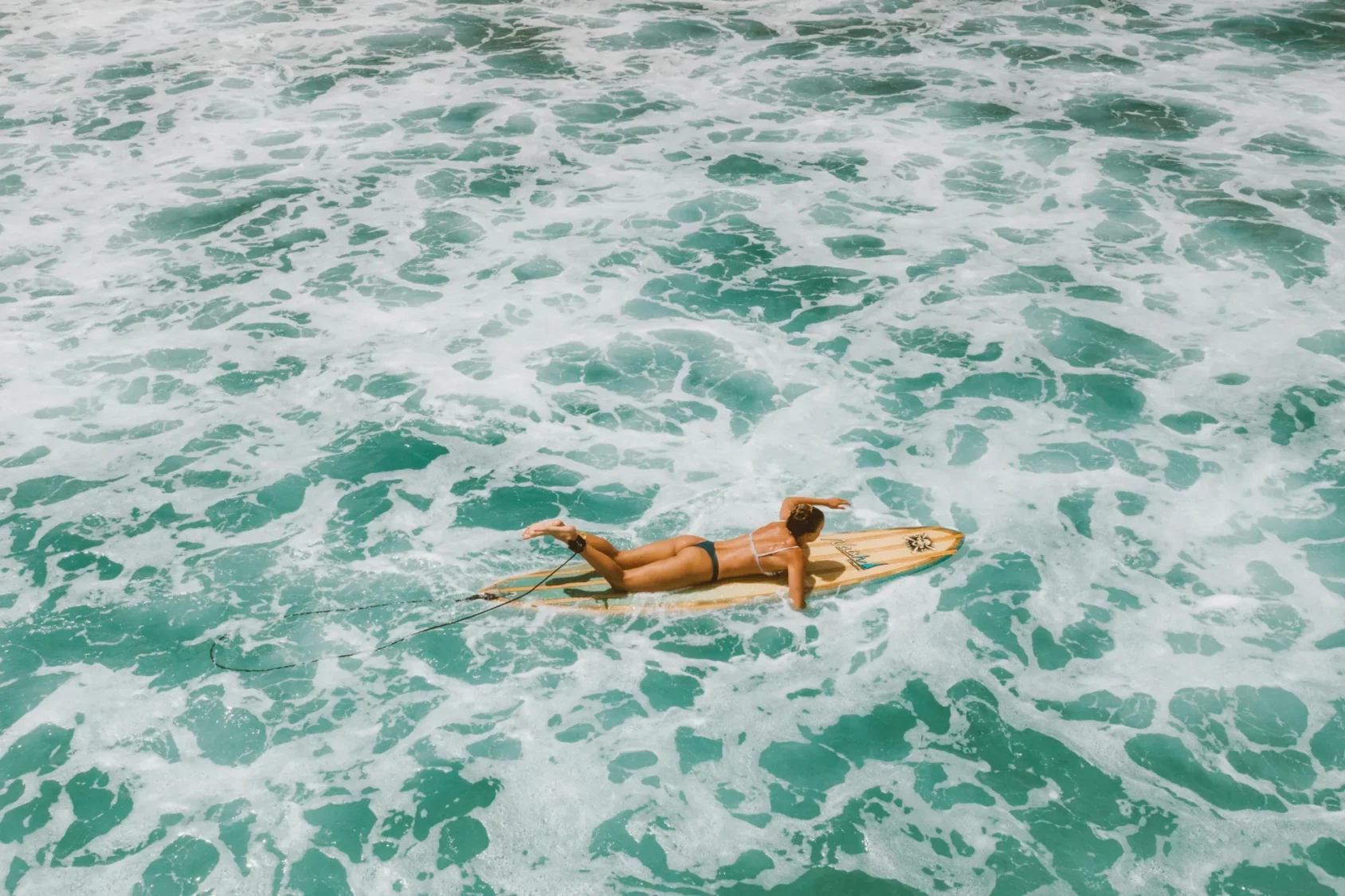
A surf retreat built for adults who are learning: warm water, forgiving waves, small groups and patient, structured coaching — with a comfortable bed and proper food to come home to each evening. Our learn-to-surf holidays get first-timers standing and progressing in a way that’s safe, unhurried and genuinely fun. Here’s exactly how the week works.
We’ve taught adults to surf on this coast since 2009, and in that time thousands of guests from dozens of countries have caught their first waves with us. We specialise in one thing and do it well: taking people from never having stood on a board to riding real, green waves — safely, quickly and without the ego and crowds that put so many adults off learning elsewhere.
A surf retreat, not a surf camp
The words get used interchangeably, but the experience is very different. “Surf camp” often means dorm beds, a young crowd and a party timetable. A surf retreat means your own ensuite room, home-cooked meals, and a calm, sociable group that’s here to learn and reset. We built Swell as the second kind: proper coaching paired with the comfort and easy atmosphere that older, working guests actually want after a day in the water.
That shapes who comes. Our guests are mostly working professionals, the average age is around the forties, and it’s a mixed, co-ed group rather than a single demographic. Around seventy per cent arrive on their own — single, divorced, or simply travelling solo — and choose Swell precisely because a shared, social holiday beats being alone at a resort. Shared breakfasts, group transport to the beach and dinners around one big table mean nobody stays a stranger past the first morning.
Where you’ll surf: the north coast of the Dominican Republic
Learning to surf is far easier in the right place. You want warm water, gentle and forgiving waves, sandy entries, and mellow crowds — not heavy reef breaks or a macho line-up. The beaches around Cabarete, on the DR’s north coast, deliver exactly that. Playa Encuentro and the nearby breaks are known for user-friendly, learner-appropriate waves, and we surf the wind-protected spots early in the morning, before the afternoon trade winds fill in and the water gets bumpy.
The water stays warm most of the year, so you can leave the wetsuit at home — a rashguard and boardshorts cover almost every day. For a first-timer, that’s one less barrier between you and the 7 a.m. alarm. And because the region is set up for visitors, arrivals, board selection and getting around are refreshingly low-hassle.
How you’ll learn: a structured method
Our method has been refined since 2009, and every session follows a clear sequence so you always know what you’re working on and why it matters for the next step. You’re grouped with guests at a similar level, so lessons move at the right pace — no waiting on people ahead of you, no being left behind.
- Beach drillsPop-up technique, stance and safety on the sand first, so your first waves aren’t your first attempt at standing.
- Whitewater startsCatching the broken, forgiving waves close to shore — the fastest way to feel what riding a wave actually is.
- Your first green wavesMoving out to catch unbroken, “green” faces, timing the paddle, and getting to your feet on a real wave.
- Trimming and turningRiding along the wave rather than straight to the beach: trimming, angling, and the beginnings of turning.
- Toward independenceLine-up etiquette, reading tides and forecasts, and the water sense that lets you surf on your own.
Coaches correct one thing at a time — hand placement, foot position, chest position — so you improve fast without your brain overloading. We use foamies, funboards and longboards, choosing the right volume for your level and the day’s waves, and everyone gets rashguards with built-in sun protection. Groups are kept small, unlike the oversized classes common in Europe.
Surf lessons for every level
We grade every session to you, and we’re honest about what we do best: taking beginners and improvers to independence. If you need advanced, video-heavy performance coaching, other retreats are a better fit — and we’ll say so.
Beginner
Never surfed, or tried once or twice years ago. We take you from your first pop-up to catching whitewater and then your first green waves.
Improver
A handful of sessions over the past few years; not yet confident or independent. We build timing, trimming and confidence in the line-up.
Intermediate
Surfing already and refining the details — pop-up, paddle technique, reading waves — on your way to becoming a self-sufficient surfer.
An honest note for intermediates
We can’t control the forecast, and we don’t push intermediate surfers into waves they aren’t ready for — we don’t agree with it. If you’re past the beginner stage, come in May, June, July, August, September or October for the best mix of conditions and coach attention. Complete beginners can come any time of year.
Yoga is part of the week
Three yoga classes a week are included with every surf week, and they’re built for surfers, not as a spa extra. Surfing is tougher on the body than it looks — continuous shoulder rotation to paddle, an arched back in the line-up, then an explosive, hip-driven pop-up. Our classes target the hips, shoulders and spine to undo exactly that, timed so you finish the week strong instead of stiff and fried. It’s the difference between “too sore to paddle by Wednesday” and seven good days on the water.
Want the detail on why the combination works so well? Our journal has a full guide to the surf and yoga retreat and how to get the most from it.
Swell Active — teaching surfing on the north coast since 2009
When to come
Cabarete’s waves work year-round, but the right month depends on where you are in your surfing.
| You are… | Best months | Why |
|---|---|---|
| A complete beginner | Any time of year | Our breaks have gentle, forgiving waves in every season. |
| An improver or intermediate | May – October | The best mix of size and shape for progressing. |
| After quiet weeks & small groups | May – August | Fewer guests, more one-on-one coach attention. |
| An independent surfer | Winter | More consistent swell for those who don’t need lessons. |
What’s included
One all-in price, no surcharges at checkout. Here’s what your surf week covers.
- Two guided surf sessions most mornings
- Coaching graded to your level, in small groups
- All surf gear — boards, leashes, rashguards
- Beach transport to the day’s best break
- Three yoga classes a week
- Boutique ensuite room, breakfasts & several dinners
- Return Puerto Plata (POP) airport transfers
- Full use of the property between sessions
See the current week’s rates and the complete list of inclusions on the pricing page.
Beyond the waves
Mornings are for surfing; afternoons are yours. On lighter days you can slot in a guided waterfall trip, a snorkel, a hike or a horseback ride on the beach, or simply rest by the pool and let the yoga do its work. It’s an active holiday, not a boot camp — the balance of effort and recovery is what makes the week feel restorative rather than exhausting.
Add wingfoiling to your week
If one sport isn’t enough, you can surf in the morning and learn to wingfoil in the afternoon, once the trade winds arrive. It’s easy to try a little of both and see which one grabs you — many guests are surprised to fall for the newer sport.
Where you’ll stay
Boutique ensuite rooms, a communal hub and home-cooked meals a short drive from the breaks — built for adults who want comfort and company.
Getting here
Fly into Puerto Plata (POP), a 30 to 40 minute transfer from us, included both ways. There are direct flights from much of the US east coast and Canada — New York, Boston, Toronto and beyond — which is why so many of our guests come from there. You won’t need a rental car: the breaks are a short drive in our transport each morning, and shops, restaurants and the beach are all within a walk.
Come and learn to surf
Tell us your dates and who’s coming, and a real person will send a custom price and availability quote — usually within the day.
Surf retreat FAQ
Is this suitable if I’ve never surfed?
Absolutely — most guests arrive as complete beginners. We start you on the sand and in the shallows with the right board, then build step by step to catching your own green waves. Teaching first-timers is what we do, and it’s all we do.
I’m travelling solo — will that feel awkward?
Not at all. Around seventy per cent of guests come on their own. Shared meals, group beach transport and the communal hub make it easy to plug in as much or as little as you like, and most people leave with friends they keep.
How old are most guests?
The average is around the forties, and it’s a mixed, co-ed group of working adults rather than a young party crowd. If you don’t want to be the oldest person in the line-up by two decades, this is the right kind of surf retreat.
Do I need to bring a wetsuit or a board?
No. The water is warm enough for boardshorts and a rashguard most of the year, and all boards and gear are provided and matched to your level and the day’s waves.
What if I’m already an intermediate surfer?
You’re welcome, with one honest caveat: we coach toward independence rather than advanced performance, and we won’t push you into waves you’re not ready for. Come May to October for the best conditions and the most coach attention.
Is yoga included, and do I have to do it?
Three surfer-focused yoga classes a week are included, and they’re entirely optional. They target the hips, shoulders and spine to aid recovery, so you feel fresher across the week — but the choice is always yours.
How do I get there?
Fly into Puerto Plata (POP), 30 to 40 minutes away, with transfers included both ways. Direct flights serve much of the US east coast and Canada, and you won’t need a rental car once you arrive.