A wingfoil holiday is a trip built around learning to wing foil — the fastest-growing watersport there is. The right one gives you steady, side-shore wind, warm flat water, quality gear and proper coaching, so most beginners are flying on the foil within days. Below: how to choose one, when to go, what it costs, and where we’d send a first-timer.
A wingfoil holiday is the fastest way to go from never having touched a wing to genuinely flying above the water. Winging looks like witchcraft from the beach and feels like a magic carpet the moment the foil lifts — and, unlike almost every other wind sport, a complete beginner can get there in a single week. The catch is that not all wingfoil holidays are equal. Get the location, the conditions and the coaching right and it’s one of the most rewarding weeks you’ll ever book. Get them wrong and you’ll spend seven days fighting gusty wind and the wrong-sized board.
We’ve been teaching winging since it arrived on our beach, so this is the honest, no-hype guide: what a wingfoil holiday actually involves, how to pick a good one, and the details that decide whether you come home flying or frustrated.
What is a wingfoil holiday?
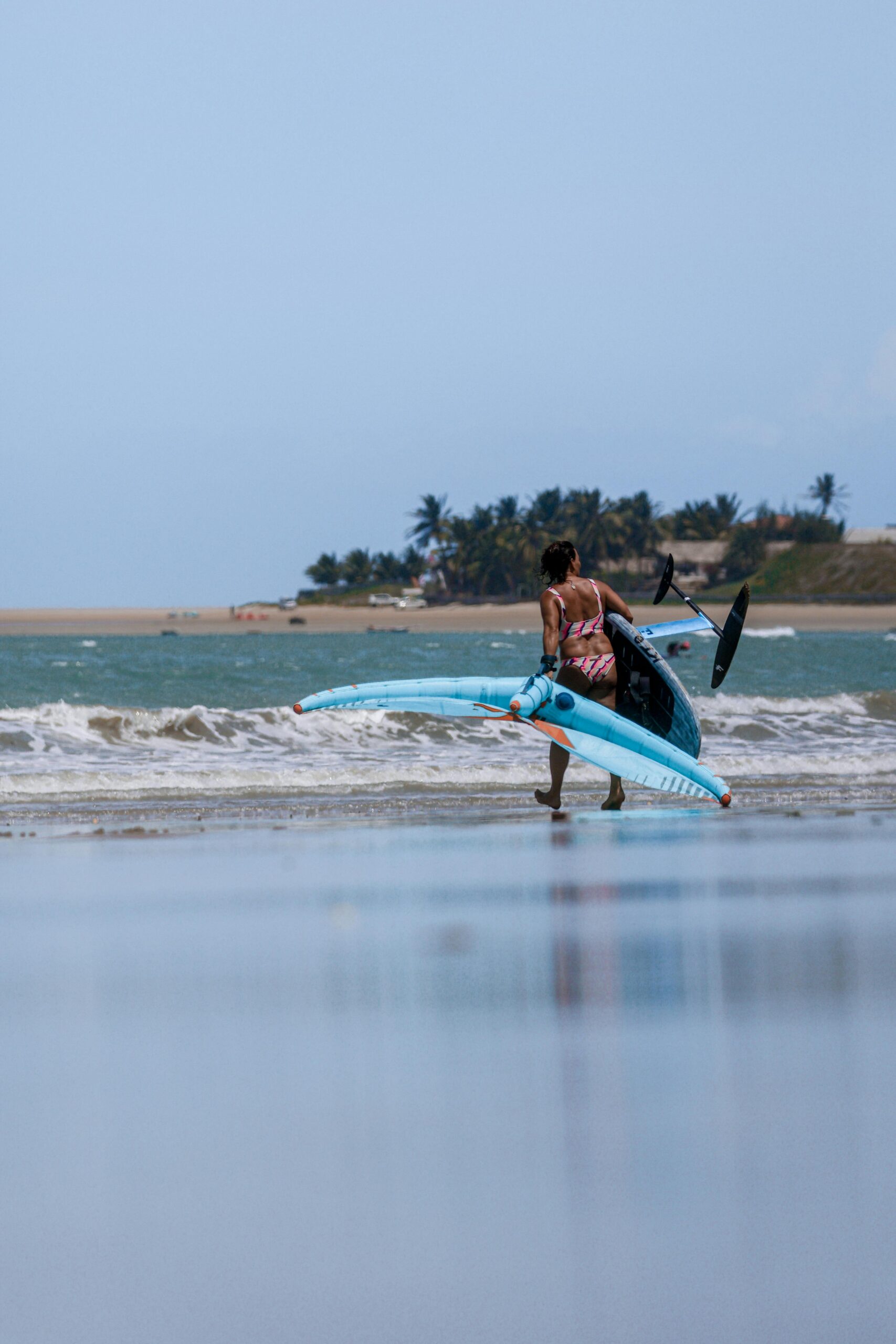
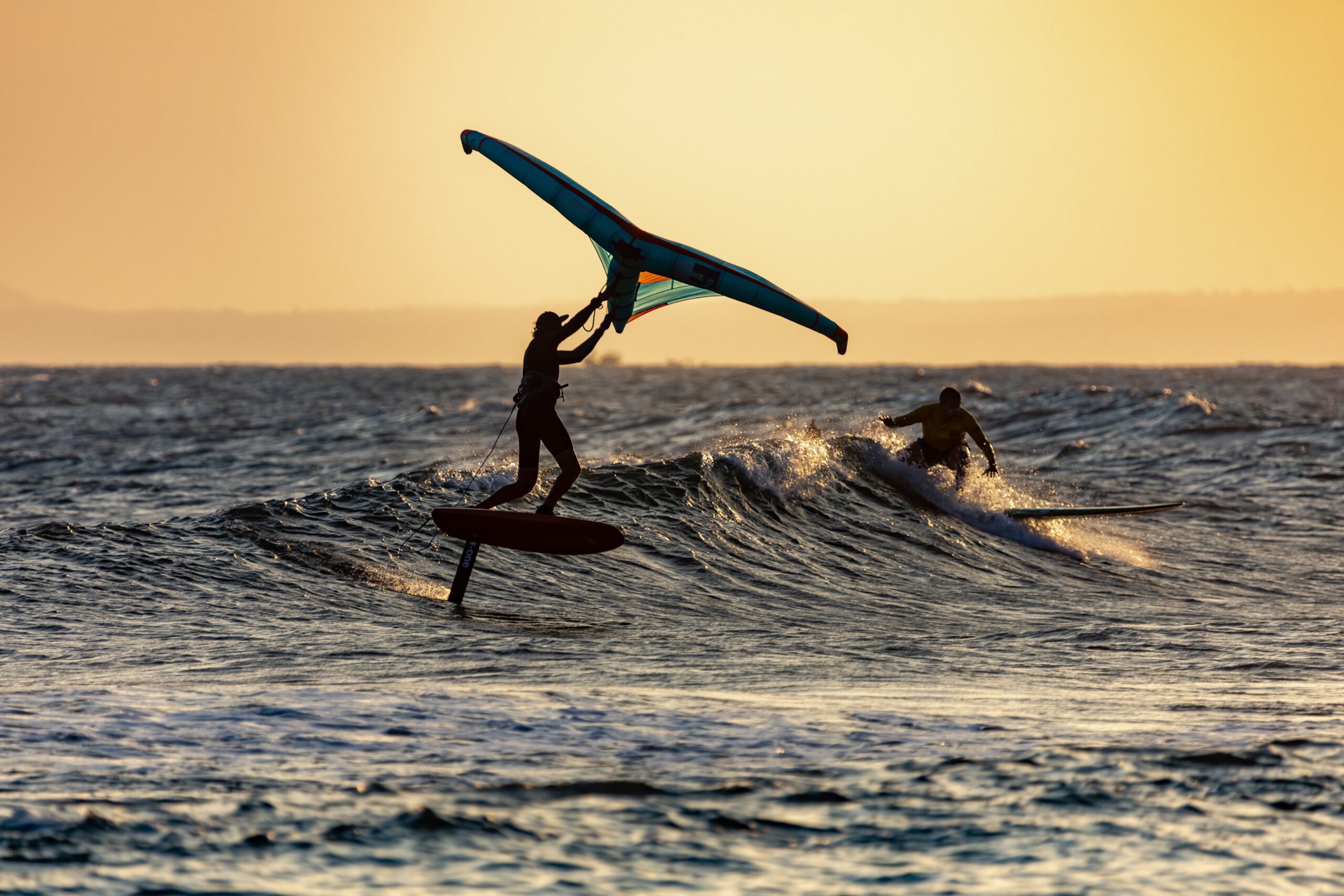
A wingfoil holiday is a trip organised around learning or improving at wing foiling, usually over five to seven days with daily lessons, gear included and accommodation on or near the water. You hold a handheld inflatable wing to catch the wind and stand on a board fitted with a hydrofoil; as you build speed, the foil lifts the board clear of the surface and you glide, near-silently, above the water.
Because the wing is simply held in your hands — not attached to the board like a windsurf rig, and not tethered to you on long lines like a kite — winging removes the scariest failure modes of older wind sports. Let go, and the wing just drops. That single design difference is a big reason wing foiling has become the fastest-growing watersport on the planet, and why a beginner can start on a holiday rather than after a season of practice.
Why a wingfoil holiday is the easiest way onto a foil
Winging has the gentlest on-ramp of any wind sport. It’s easier to start than kitesurfing, less physical than windsurfing, and the equipment does you a favour: a big, floaty beginner board and a light hand-held wing let you learn wing control and balance before the foil ever comes into play. With good instruction and reliable wind, most first-timers feel the foil lift within their first few sessions.
The conditions do half the teaching. Give a beginner steady, side-shore wind and warm, flat water, and winging stops being scary — most of our guests are up and flying on the foil within a few days.
Clare Mutsaars, Swell Active co-founder (teaching adults on the water since 2009)
That’s the real argument for doing it as a holiday rather than at home: a good school compresses the learning curve. The frustrating early stage — where you can balance but the foil won’t quite lift — is exactly where reliable conditions and a coach beside you make the difference between a breakthrough by day three and a week of face-plants. On our own beach we’ve had guests with zero watersport background flying on the foil in around three days, on roughly six hours of lessons.
Is a wingfoil holiday right for you?
Almost certainly, yes. Wing foiling is accessible to most people from around age ten to seventy, needs no previous board-sports experience and doesn’t demand great strength. If you can swim confidently and you’re reasonably active, you’re a candidate. Here’s how it stacks up against the wind sports it’s often confused with.
| Sport | Learning curve | Attached to you? | Wind needed |
|---|---|---|---|
| Wing foil | Gentle start | No — handheld, drops if released | Light (from ~12 knots) |
| Kitesurf | Steep | Yes — long lines + harness | Moderate |
| Windsurf | Moderate | Yes — rig fixed to board | Moderate to strong |
| Surf | Moderate | No — but needs waves | None (needs swell) |
The takeaway: winging gives you the flying-above-the-water payoff of a wind sport with the lowest barrier to entry and the fewest ways to get into trouble. It’s also the sport most likely to reward a single focused week.
Wind makes or breaks a wingfoil holiday
Everything good about a wingfoil holiday comes down to wind quality, not just wind quantity. Beginners learn fastest in steady, predictable, side-shore or side-onshore wind of roughly 12 to 18 knots over flat water. Gusty wind that surges and drops will multiply the time it takes to learn; offshore wind (blowing out to sea) is unsafe and should be avoided entirely.
This is where destination choice really matters. Trade-wind spots with a flat-water lagoon and a school that grades your gear to the day’s conditions are worth travelling for. It’s also why we’re upfront with guests about our own numbers rather than promising wind we can’t guarantee.
- Wind to fly on the foilfrom ~12 knots (Force 4)
- Days per month with 12kt+typically 15–20
- Waterflat lagoon, warm year-round
- Wind directionside-shore trade winds
- Wind timingfills in after lunch, most days
- Typical course8 hours over 5–7 days
Reliable afternoon wind has a nice side effect: your mornings are free. Plenty of guests start the day with a learn-to-surf session and then wing in the afternoon when the trades arrive — two sports in one week, coached around the day’s conditions.
How to choose a wingfoil holiday: a 7-point checklist
Use this to separate a genuine learning holiday from a listing that just happens to have “wingfoil” in the title.
- Reliable, side-shore wind. Ask for real statistics — days per month above 12 knots — not marketing adjectives. Steady beats strong.
- Flat water to learn on. A lagoon or protected bay is far kinder than open swell for your first sessions.
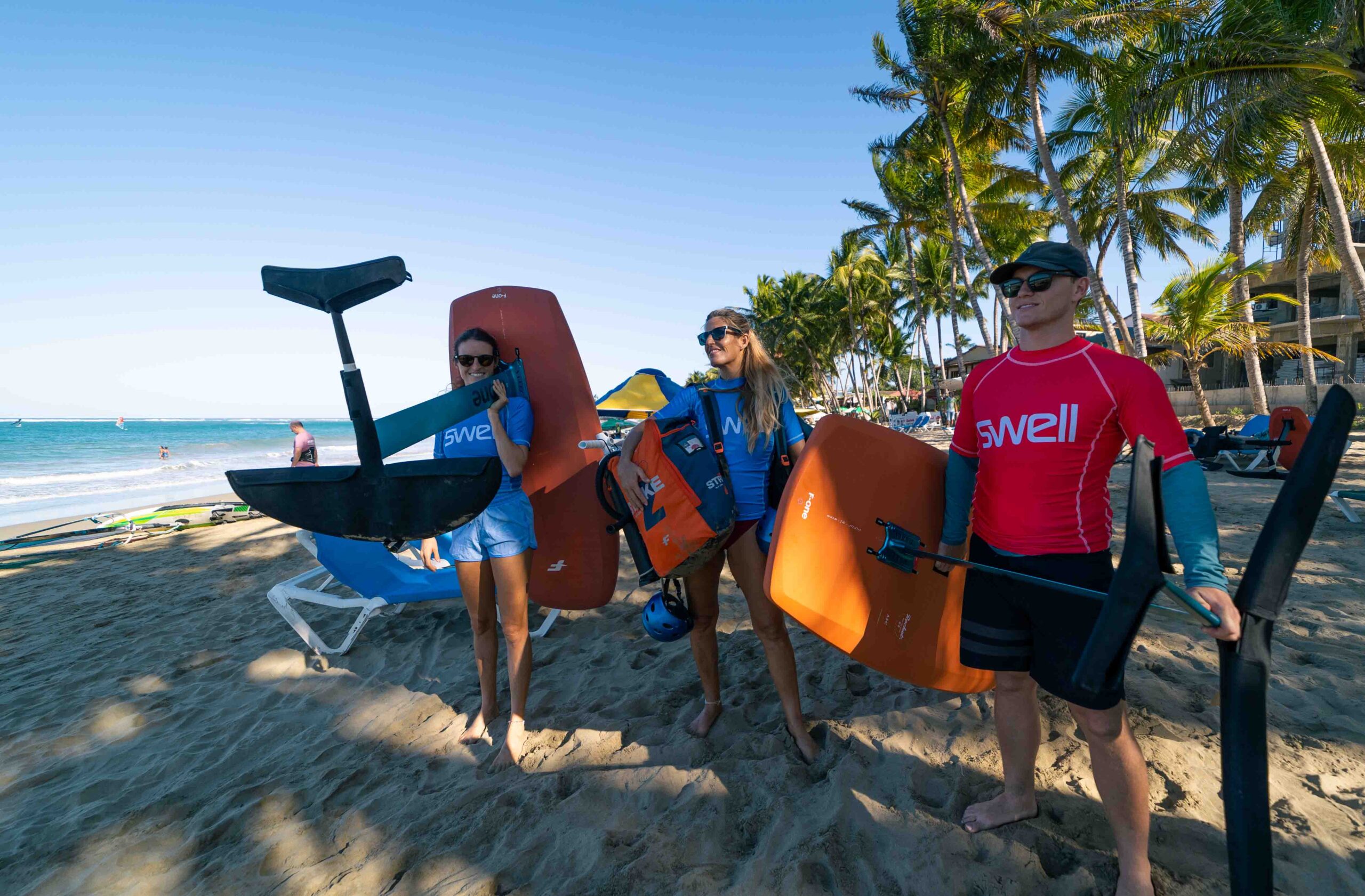
- Gear included and graded to you. A full quiver on site means the school sizes your board, wing and foil to the day and to your ability — nothing to buy or lug through an airport.
- Small groups and real coaching. One-to-one or tiny-group tuition, with feedback in real time, is how you actually progress in a week.
- Safety built in. Beach briefings, self-rescue, right-of-way and kit checks, plus helmet and impact vest. A foil demands respect.
- Short, painless logistics. A quick airport transfer and no need for a rental car keeps the week about water time, not admin.
- Comfortable, social base. Somewhere to recover well and meet people. If you’re travelling solo — most winging guests do — a communal, sociable setup matters as much as the lessons.
A few lessons with a good instructor genuinely save weeks of self-taught frustration — the consensus across independent beginner wing foil guides is the same as ours. The holiday format simply packs those lessons into consecutive days of good conditions.
When to go: the best months for wind and flat water
The best time for a wingfoil holiday is whenever your destination has the most consistent wind and the flattest water. In our corner of the Caribbean, that means most of the year works, with a couple of standout windows and one period to plan around. Climate patterns are shifting, so treat any month table as a strong guide rather than a guarantee.
| Months | Wind | Water | Best for |
|---|---|---|---|
| Feb – Apr | Strong & steady | Good | Reliable learning wind |
| Jun – Aug | Steady | Flattest | Beginners; calmest lagoon |
| May & Sep (early) | Variable | Good | Quieter weeks, smaller groups |
| Mid-Sep – Mid-Oct | Hit or miss | Variable | Best avoided (hurricane season) |
| Nov – Jan | Mixed | Good | Warm escape, some windy spells |
If your priority is the calmest possible water to find your balance on, June and July are hard to beat. If you want the surest wind, the late-winter and spring window is your friend.
What a day on a wingfoil holiday looks like
Winging runs on the wind’s schedule, and in a trade-wind spot the wind is a lunchtime creature — so a good wingfoil day has a relaxed morning and an action-packed afternoon. Here’s a realistic shape of the day at a retreat like ours.
| Time | What’s happening |
|---|---|
| Morning | Slow start. A lie-in, a swim in the bay, the pool — or an optional surf session while the water’s glassy. |
| ~10:00 | Proper home-cooked breakfast to fuel the day. |
| Early afternoon | Meet on the beach: rig a wing sized to the forecast, fly it on the sand, beach briefing, then onto the water. |
| ~13:00–15:00 | The main event — two hours in the steadiest, most predictable wind of the day. |
| Evening | Rinse off, then dinner around one big table while the day’s wipeouts and breakthroughs get retold. |
Over a week that rhythm adds up fast: beach drills and wing handling early on, first foil lifts mid-week, and sustained flights in both directions by the end. Between sessions you’re resting somewhere comfortable rather than roughing it — our boutique retreat accommodation is built around exactly that recover-well, meet-people balance.
What a wingfoil holiday costs (and what’s included)
A quality, all-inclusive wingfoil holiday typically runs into the thousands per week once you factor in coaching, gear, accommodation and food — but the headline number matters less than what’s actually inside it. The thing that makes a learning holiday good value is not buying equipment: a new beginner setup alone costs roughly $1,500–$3,500, before you’ve had a single lesson or booked a bed.
On a proper package, the gear, the coaching and the bed all come together. What you want to see in the inclusions:
- Daily wingfoil coachinggraded to your level
- All equipmentfull quiver, sized to the day
- Accommodationprivate, comfortable, near the water
- Mealsbreakfast & several dinners
- Airport transfersincluded both ways
- Hidden feesnone — one all-in price
Always ask for the all-in figure with taxes and transfers included, so you’re comparing like with like. You can see exactly what our week includes — no resort fees, no equipment surcharges, no surprises at checkout.
Where we’d send a first-timer: Cabarete, Dominican Republic
If you asked us where to book your first wingfoil holiday, the honest answer is a flat-water trade-wind spot with a proper school — and the one we know best is Cabarete on the north coast of the Dominican Republic. It has a large, flat learning lagoon a few minutes’ walk from us, dependable side-shore afternoon wind, warm water you can fall into all year, and a short 30–40 minute transfer from Puerto Plata airport (POP), with direct flights from much of the US east coast and Canada.
It’s also simply an easy place to learn as an adult. Swell has taught adults on this coast since 2009; the crowd is more “sociable retreat” than “party camp,” most guests arrive as first-timers, and the majority travel solo, so nobody stays a stranger past the first dinner. If you want the specifics of the course, the wind windows and the levels we teach, that all lives on our learn-to-wingfoil retreat page.
Ready to fly?
Tell us your dates and how many of you are thinking of coming, and a real person will send you a custom price and availability quote — usually within the day. No account, no newsletter, no pressure.
Wingfoil holiday FAQ
Is a wingfoil holiday suitable for complete beginners?
Yes — most guests on a good wingfoil holiday arrive having never touched a wing. Winging is the gentlest way onto a foil, needs no previous watersport experience and doesn’t demand great strength. With reliable wind and proper coaching, complete beginners are usually flying on the foil within a few days.
How long does it take to learn to wingfoil?
With good instruction and steady wind, most people learn the basics of wingfoil flight in around eight hours of lessons spread over five to seven days. That’s exactly why the holiday format works: it packs consecutive days of good conditions and coaching together, so you progress far faster than practising once a week at home.
What wind do you need for a wingfoil holiday?
Beginners learn best in steady, side-shore wind of roughly 12 to 18 knots over flat water. You need around 12 knots to get up and ride on the foil. Wind quality matters more than raw strength — gusty or offshore wind makes learning much harder, so choose a destination known for consistent trade winds.
Do I need to bring my own equipment?
No. On a proper wingfoil holiday the school provides a full quiver of gear and sizes your board, wing and foil to the day’s conditions and your ability. That saves you both the $1,500-plus cost of a beginner setup and the hassle of flying with bulky kit.
When is the best time of year to go?
Go whenever your destination has the most consistent wind and flattest water. In Cabarete, February to April brings the strongest steady wind, while June to August offers the flattest lagoon for beginners. Mid-September to mid-October is best avoided, as passing storms make the wind unreliable.
Written by Clare Mutsaars, co-founder of Swell Active, which has taught adults to surf and wingfoil on the north coast of the Dominican Republic since 2009.