Surf and Wingfoil in One Week: How to Split Your Days | Swell Active
The short version
Yes, you can surf and wingfoil in a single week in Cabarete — because the day splits itself. Mornings are glassy and calm for surf; the trade winds build through the afternoon for wing. Doing both suits people who want variety over mastery, or who already have one sport. True first-timers usually progress faster by picking one. Here is how to structure the week either way.
Most surf and wingfoil retreats make you choose. You book a surf week, or you book a wingfoil week, and that is that. Cabarete is one of the few places where you do not have to — not because we squeeze two lessons into a crowded schedule, but because the weather here hands you two completely different playgrounds at two different times of day.
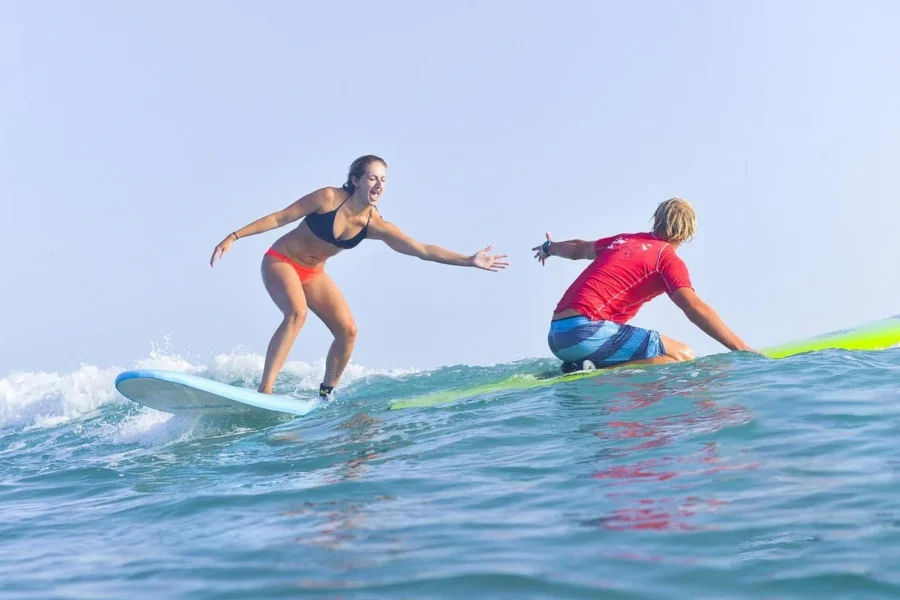
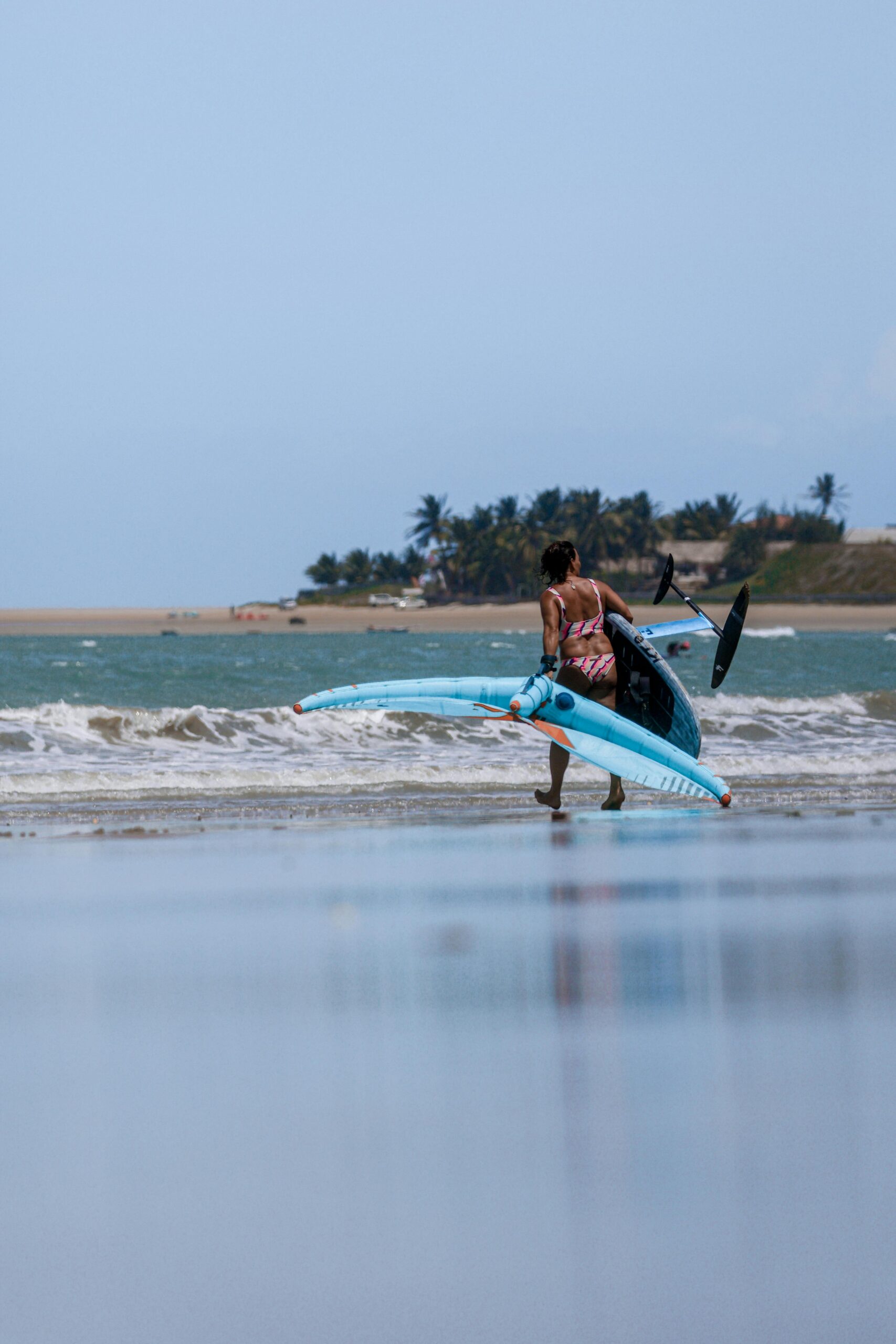
The calm morning ocean is made for learning to surf. By early afternoon the famous Cabarete trade winds fill in, the water flattens off, and it becomes an ideal place to learn to wingfoil. One coastline, one day, two sports. It is the quiet reason a combined surf and wingfoil holiday actually works here when it would fall apart almost anywhere else.
Whether you should do both is a separate question — and an honest one we will answer below. First, why the day divides so neatly.
Why Cabarete lets you do both in one week
Short answer: Cabarete’s wind runs on a daily clock. Mornings are light and clean — the best window to surf. As the island heats up, a thermal sea breeze stacks on top of the trade winds and builds through the afternoon, giving you the steady wind wingfoiling needs. Surf early, wing late.
This is not a marketing line — it is the sea breeze cycle every local rider plans their day around. The wind comes from two sources that combine: the year-round northeasterly trade winds off the Atlantic, plus a thermal breeze created as Hispaniola’s mountains heat faster than the ocean and pull cooler air onshore. That thermal effect is why the wind reliably strengthens from around midday into the late afternoon.
So the surfers here have always done the obvious thing: paddle out in the calm morning, then switch to wind sports once the breeze arrives. You are simply following a rhythm the coastline has run for forty years.
A day on the water — how the wind clock runs
| 6–8am | 8–11am | 11am–1pm | 1–5pm | 5–7pm |
| Glassy surf | Surf | Wind builds | Wingfoil | Sunset & dinner |
Warm amber is the calm morning surf window; teal is the afternoon wind. The middle is the daily changeover as the breeze arrives. Exact timings shift with the season and the day — the instructors read the sky, not just the app.
|
18–25 kn
Typical summer afternoon wind — plenty for wingfoiling, which needs less than kite
|
~26°C
Water temperature year-round — no wetsuit, so two sessions a day stays comfortable
|
250+ days
Of rideable wind a year, so an afternoon wing session is rarely a wash-out
|
If you like to plan by the numbers, it is worth glancing at the long-term Cabarete wind statistics or the live Cabarete wind forecast before you travel. Both confirm the same story: light mornings, building afternoons, almost every day.
A sample Saturday-to-Saturday week
Short answer: Surf every morning while the ocean is calm, wingfoil on the afternoons the wind is up, and keep the evenings for yoga, the pool and the shared dinner table. It is a full but genuinely enjoyable rhythm — not a bootcamp.
Here is how a typical combined week is shaped for a beginner doing both. It is a template, not a timetable: your coach adjusts it to the forecast, your energy and how quickly you find your feet.
| Day | Morning | Afternoon | Evening |
|---|---|---|---|
| Sat | Arrive, settle in | Beach walk, kit check | Welcome dinner |
| Sun | Surf — first lesson | Wing — intro on the beach | Rest, pool |
| Mon | Surf | Yoga | Communal dinner |
| Tue | Surf | Wing | Rest |
| Wed | Surf | Yoga | Communal dinner |
| Thu | Surf | Wing | Rest, pool |
| Fri | Surf or free day trip | Wing — last session | Farewell dinner |
Notice the yoga afternoons. Yoga runs Monday, Wednesday and Friday after the water — the same slot the wind is up. So a realistic combined week gives you roughly three surf-only mornings paired with yoga, and three or four afternoons on the wing. You are not doing every single thing every single day, and that is by design. For the full day-by-day feel of a first-timer week, see what a beginner surf retreat actually looks like.
Surf or wing first? Reading the day
The order is set by nature, not preference. Surf goes first because the morning ocean is cleanest before the wind textures the wave face. Wing comes second because it needs the breeze that has not arrived yet at 8am. Try to reverse it and you fight the conditions all day.
The thing nobody tells first-timers is that two water sessions in a day is a lot — especially learning, where you are paddling hard and falling often. Both sports use your whole body in unfamiliar ways. Most of our guests are working professionals around 47, not twenty-year-olds, and the ones who thrive treat rest as part of the training, not a failure of it.
That is why the template above builds in genuine gaps: a long lunch, a swim, a hammock, a nap. You will learn faster fresh in two focused sessions than wrecked across four sloppy ones.
Both sports, or one? The honest trade-off
Short answer: Splitting a week across two sports means slower progress in each than if you gave the whole week to one. That is a fair trade if variety is the point of your holiday. If your goal is to stand up confidently and ride green waves by Friday, commit to surfing alone.
We will be straight with you, because it is our own experience: around 60% of guests who come to Swell choose to focus on a single sport. There is a reason. Skill in the water compounds — the muscle memory you build on Monday pays off on Thursday, and a full week of surfing gets a nervous beginner much further than three half-weeks of anything.
| Commit to one sport | Split across both | |
|---|---|---|
| Progress by Friday | Fastest — often riding independently | Solid start in each, mastery in neither |
| Best for | Nervous first-timers with one clear goal | Variety-seekers, or those with one sport already |
| Body load | One session a day, easier to recover | Two-a-days — needs decent baseline fitness |
| The upside | The deep satisfaction of really getting it | You leave knowing which sport you love |
There is one genuinely great reason to split, though: you do not yet know which sport is yours. A week sampling both is the fastest way to find out — and plenty of guests come back the following year to go all-in on the one that hooked them.
Who should do both — and who shouldn’t
|
Do both if…
|
Pick one if…
|
“The people who leave happiest are the ones who came with a plan and let the wind change it. Some fall for wingfoiling and never touch the surfboard again. That’s not a wasted week — that’s the whole point of trying both.”
— Jeroen Mutsaars, co-founder, Swell Active
Making a two-sport week actually work
If you do decide on both, a few things keep it fun instead of frantic. None of it is complicated — most of it we handle for you.
- ✓ Tell us your goal at booking. “Mostly surf, dabble in wing” is a different week to a 50/50 split.
- ✓ Let the coaches read the forecast. On a big-wind day we lean into wing; on a flat, glassy one we surf longer.
- ✓ Eat and rest like it is part of the plan. The pool, the hammocks and the long lunch are what make two-a-days sustainable.
- ✓ Travel in the wind season if wing matters. June to August has the most reliable afternoon wind and the flattest water for learning.
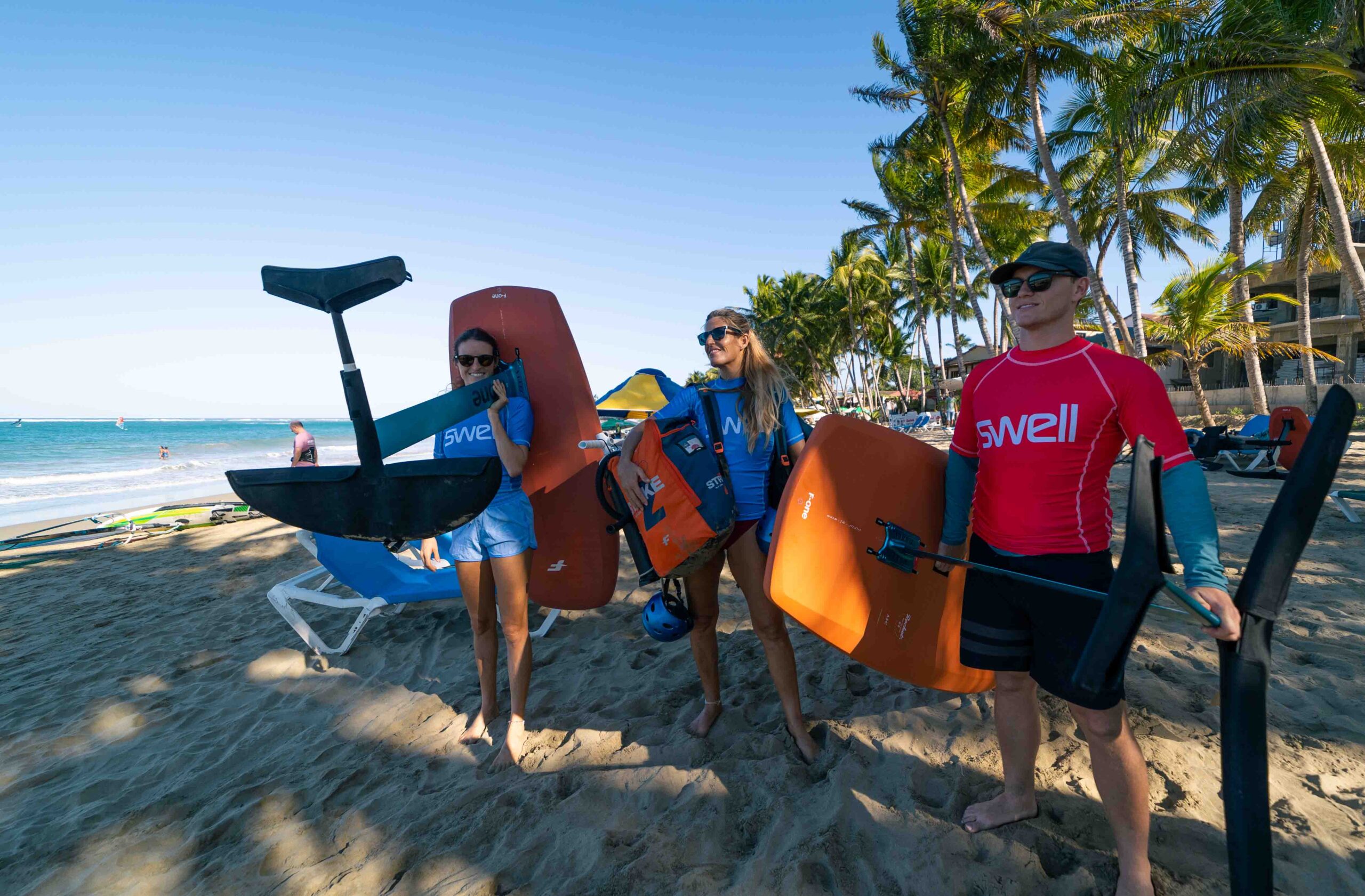
- ✓ Leave the logistics to us. All gear is provided, surf breaks are a short morning drive, and the wingfoil beach is a five-minute walk.
The takeaway
Cabarete is one of the rare places built for a combined surf and wingfoil holiday, because the day hands you calm mornings and windy afternoons without you lifting a finger. Do both if you want variety or you are hunting for your sport; commit to one if you want to leave genuinely able. Either way, the evenings — the pool, the yoga, one long shared table — are the same, and for most of our solo travellers they matter just as much as the water.
See how a week is priced, all-in with no surcharges, on our pricing page, or read more about the sports themselves — the surf retreat and the wingfoil holiday. When you are ready, tell us your dates and whether you are leaning surf, wing, or both, and we will send a personalised quote with honest advice for your week.
Surf and wingfoil in one week: FAQ
Can a complete beginner really do both in one week?
You can start both and have real fun with each, but you will not master either. For a first-timer, a week split across two sports gives you a taste of both rather than independence in one. If leaving able to surf on your own is the goal, focus on surfing — you can always add wingfoiling on a return trip.
Which months are best for a combined surf-and-wingfoil week?
June to August brings the most reliable afternoon thermal wind and the flattest water, which is ideal for learning to wing while still surfing the mornings. Surf itself works year-round for beginners. Winter delivers bigger, cleaner swell for surfers but slightly less predictable wind.
Do I need to be fit to do two sessions a day?
You need reasonable everyday fitness, not athlete conditioning. Two water sessions a day is demanding for anyone learning, so recovery matters — which is why the week is built around long breaks, the pool and yoga. If two-a-days sound like too much, one sport plus rest is the happier choice.
Is wingfoiling harder to learn than surfing?
Neither is “easy,” but many people are surprised that wingfoiling can click quickly in the right conditions, because the steady Cabarete wind does half the teaching. Surfing has a gentler entry but a longer road to reading waves. Trying both in a week is honestly the best way to feel the difference for yourself.
Can my partner surf while I wingfoil?
Absolutely — couples and friends often mix and match, one on the waves and one on the wing, meeting back at the pool afterwards. Everyone shares the same accommodation, meals and social hub regardless of what they choose on the water. It is one of the easiest ways for two people with different interests to holiday together.
About the author
Jeroen Mutsaars co-founded Swell Active in Cabarete in 2009 and runs the water side of the retreat. He has spent fifteen years watching thousands of guests — most of them adult beginners — work out how to spend a week on this coastline. He writes about surfing, wingfoiling and getting the most out of a week in the Dominican Republic.
Jeroen Mutsaars is the co-founder of Swell Active, the adult surf and wingfoil retreat he and Clare Mutsaars built from scratch in 2009 on the north coast of the Dominican Republic. They opened it after searching the globe for the ideal place for adults to learn a watersport safely and quickly. Jeroen is the watersports side of the partnership. His background runs across windsurfing, surfing, kitesurfing and sailing, and more recently the foil sports — wing foiling and foil surfing — that Swell now teaches. That hands-on grounding shapes how the retreat coaches beginners: the right kit for the conditions, a safe progression, and reliable wind and flat water doing half the teaching. He writes about the watersport side of a Swell trip — how to learn, what the conditions are like on the north coast, and how to choose the gear and timing that make a week work.
More from Jeroen Mutsaars →