What a Beginner Surf Retreat Actually Looks Like
A day-by-day picture of a first-timer week: coaching, rest, and a social table.
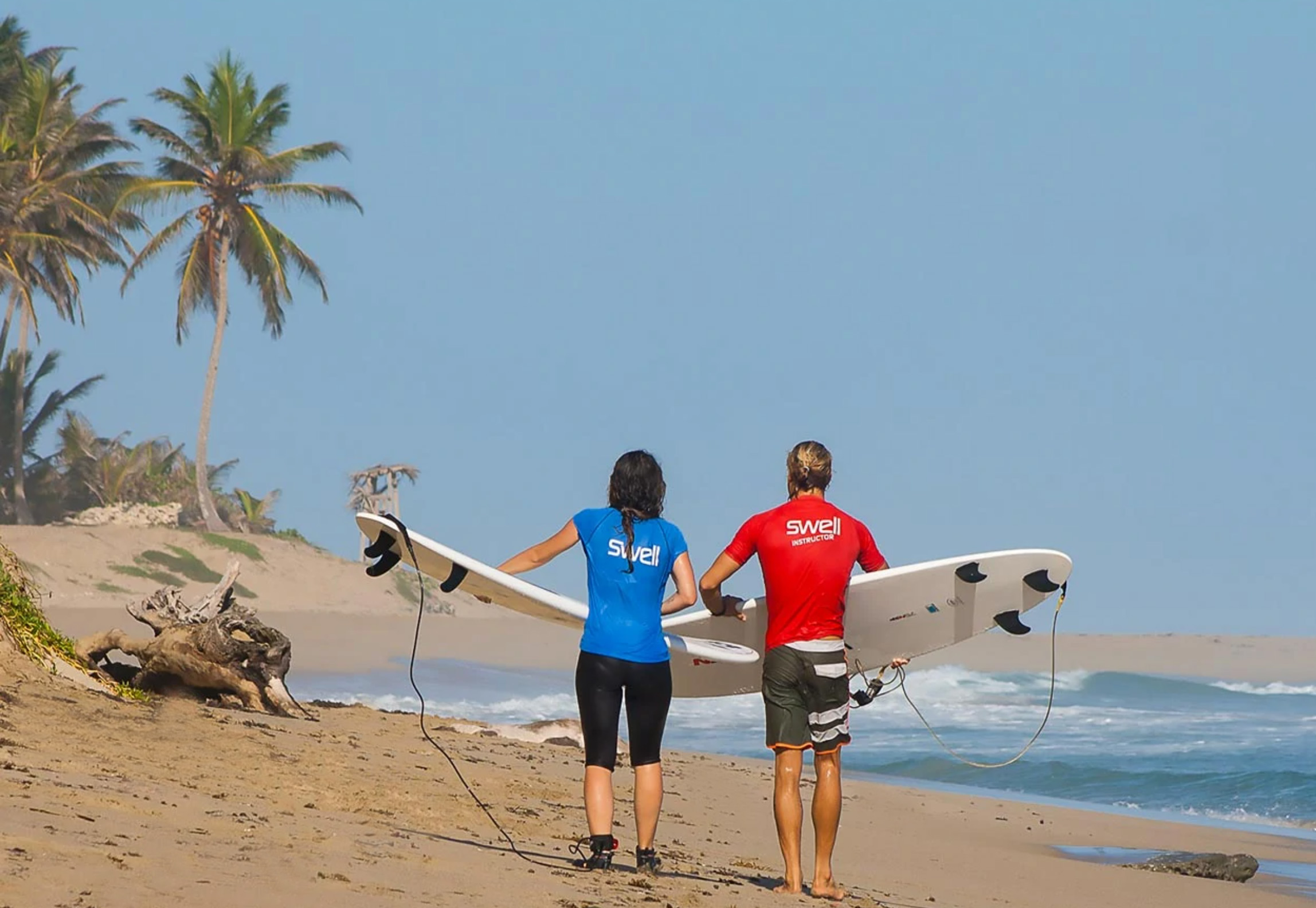
The word “camp” does a lot of damage. Say it and most adults picture dorm bunks, a 6am whistle, and a crowd of twenty-somethings. A beginner surf retreat is a different thing entirely: structured surf coaching pitched to people who have never stood on a board, wrapped in a comfortable place to sleep, real food, and enough recovery built into the week that you actually improve instead of just surviving. This is what one genuinely looks like, hour by hour and day by day, so you know what you are booking before you book it.
The short version
A beginner surf retreat pairs daily, level-graded surf coaching with a proper place to stay, home-cooked meals, and rest days built around your body. Mornings are for the water, afternoons for recovery and yoga, evenings for a shared table. Most guests arrive as complete first-timers, many travel solo, and a well-run week gets you from the sand to your first real waves.
What a beginner surf retreat actually is
A beginner surf retreat is a week-long, coaching-led trip designed for adults with little or no surf experience. It combines structured lessons every day, comfortable private accommodation, meals, and recovery time in one package — so the whole week is built around learning safely rather than partying or roughing it.
The difference from a “surf camp” is less about the surfing and more about everything around it. A camp often means shared rooms, a young crowd, and a loose schedule. A retreat means your own room, an adult pace, and a structure that treats rest and food as part of the training, not an afterthought. You still get the social, meet-people side that makes a surf trip fun — it is just aimed at grown-ups who want to sleep well and progress.
It is also different from simply booking a few surf lessons near a hotel. On a retreat, the coaching, the accommodation, the transport to the break, and the recovery all connect. Nobody is watching the clock or upselling you. The week has a shape, and that shape is what gets a nervous beginner standing up.
A day in the life
A typical day starts early with two morning surf sessions while the water is cleanest, breaks for a proper late breakfast, then opens up into a relaxed afternoon of rest, optional yoga, or a swim — before the group comes back together for dinner. The rhythm is deliberate: hard effort in the morning, recovery in the afternoon.
Surf conditions are best early, so the water comes first. At Swell, the break is a short drive away and we run transport twice each morning, so you are surfing when the ocean is at its friendliest for learning. You eat a real breakfast after the first sessions, not before — surfing on a full stomach is miserable.
| When | What happens | Why it is there |
|---|---|---|
| Early morning | Light bite, then transport to the surf break | Cleanest, most beginner-friendly water of the day |
| Morning | Two coached surf sessions, graded to your level | Most learning happens when you are fresh |
| Mid-morning | Full home-cooked breakfast back at the retreat | Refuel without surfing on a full stomach |
| Afternoon | Rest, pool, a swim, or an optional adventure trip | Recovery is when your body banks the progress |
| Later afternoon | Yoga on set days (Mon / Wed / Fri in the surf package) | Loosens the shoulders and hips surfing hammers |
| Evening | Family-style dinner around one big table | The social glue — nobody stays a stranger |
The afternoon gap is not filler. Independent guidance for beginners lands on the same rhythm we do: around twice a day in the water is ideal, and piling on more sessions mostly adds fatigue, not skill. Rest is part of the method.
Your first week, session by session
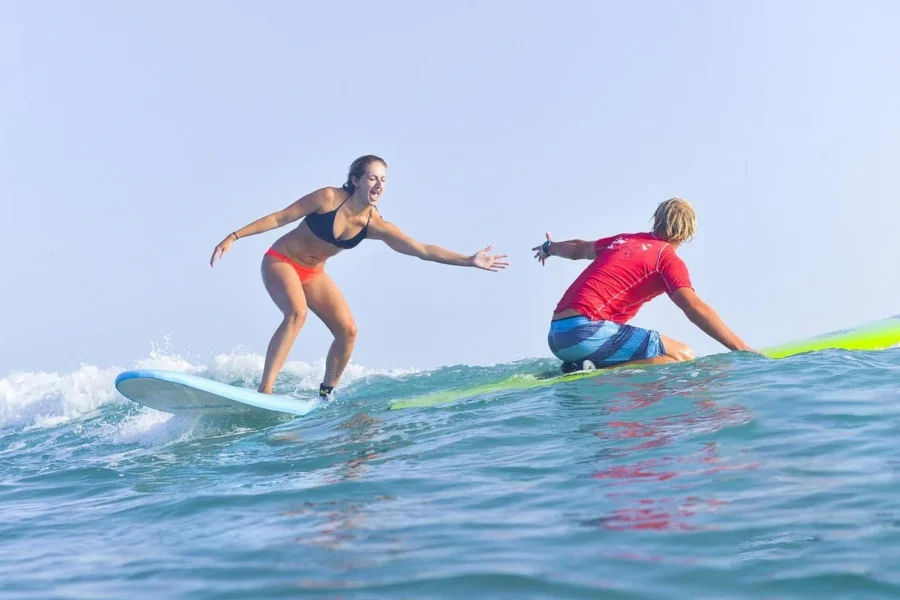
Most first-timers stand up in whitewater within their first session or two, ride broken waves confidently by mid-week, and start catching their first unbroken “green” waves toward the end. A week of daily, coached sessions is enough to move from the sand to real rides — as long as the waves and the teaching suit beginners.
Progress in surfing is a ladder, and a good retreat walks you up it one rung at a time. According to a realistic beginner learning timeline, most people stand up on their first lesson and need roughly five to ten sessions to start catching unbroken waves on their own — which is exactly what a full week of twice-daily coaching gives you. The part that takes everyone by surprise is that the pop-up and the paddling are harder than the standing itself; you will fall, a lot, and that is the process working.
| Stage | What you work on | What it feels like |
|---|---|---|
| Days 1–2 | Beach drills, paddling, the pop-up, first whitewater rides | Exhausting and exhilarating; you stand up at least once |
| Days 3–4 | Consistent whitewater riding, board control, wave selection | Wipeouts stop being scary; paddling gets easier |
| Days 5–7 | Reading the ocean, angling the board, first green waves | The click — a clean ride you actually chose |
Nobody arrives expecting to fall fifty times on day one. Everybody who pushes through it is grinning by Friday. That gap — from nervous to hooked — is the whole reason we do this.
— Clare Mutsaars, co-founder, Swell Active
Who else is there
The quiet worry most people carry to a beginner surf retreat is some version of “will I be the oldest, the worst, and the only one on my own?” On a retreat built for adults, the answer to all three is no.
Most guests arrive as first-timers or returning improvers, so you are not the odd one out — you are the target audience. The average age skews firmly toward the surf-retreat end rather than the gap-year end; think working professionals, not teenagers. And solo travel is the norm, not the exception: a large majority of our guests come on their own, which is precisely why the shared breakfasts, group transport, and one big dinner table exist. They turn a solo trip into a social one by the first morning. Age itself is rarely the barrier people fear — plenty of people learn to surf comfortably in their 40s, 50s and beyond; paddle fitness just takes a little longer to build, which is true of any new sport.
Small groups matter here too. When lessons are capped and graded by level, you are never waiting on someone far ahead of you or being dragged past your comfort zone. You progress at the right pace, with a coach who can actually see you.
What is included
A genuine beginner surf retreat is close to all-inclusive: accommodation, daily coached surf sessions, all the surf gear, transport to the break, breakfast every day and several dinners, plus yoga are typically bundled into one price. The main things usually charged separately are optional day trips and airport-adjacent extras.
The point of bundling is simple — you land, and the week is handled. At Swell, that means a private ensuite room (no dorms), daily breakfasts and three dinners a week around the shared table, all boards and equipment sized to you, morning transport to the surf, three weekly yoga classes inside the surf package, and airport transfers. You do not need a rental car, because everything you need is within a short walk or a provided ride.
- Private, comfortable accommodation — your own room, not a bunk
- Daily coached surf sessions, graded to your level
- All surf equipment: boards, leashes, rashguards
- Transport to the day’s best beginner break
- Daily breakfast and several shared dinners
- Yoga sessions for recovery and mobility
- Airport transfers
What is usually not included is the stuff that should be optional: off-water adventure trips like a waterfall hike, alcohol, and anything genuinely personal. A clear retreat tells you the price is all-in and names the few extras up front. If you want the full picture of how a week is put together, our surf retreat page and pricing page lay out exactly what a package covers.
How to spot a genuinely beginner-friendly retreat
Not every place calling itself a retreat is built for someone who has never surfed. A few signals separate the ones that are from the ones that just have a nice pool.
- A beginner-safe wave. A sandy, forgiving beach break — not a heavy reef — is what you want for your first week.
- Small, level-graded groups. Capped numbers and grouping by ability mean real attention, not crowd control.
- An adult-focused vibe. The crowd and the schedule should match you: activity over all-night parties.
- Recovery built in. Rest days, yoga, and a sane pace signal a place that understands how adults actually learn.
- Real coaching, not just supervision. Structured progressions and feedback beat a lifeguard watching you flail.
- Honest inclusions. One clear price with the extras named — no surprises at checkout.
If yoga and recovery are a big part of why the combination appeals to you, it is worth understanding how the two sports fit together across a week — our honest guide to a surf and yoga retreat goes deeper on that. And if you want to see where you would actually stay between sessions, the retreat and accommodation page shows the rooms and the communal hub.
Beginner surf retreat FAQ
Do I need any surfing experience to book a beginner surf retreat?
No. A beginner surf retreat is designed for people who have never surfed. Most guests arrive as complete first-timers, and coaching starts on the sand with the basics before you ever paddle out. If anything, no prior experience means no bad habits to unlearn.
Am I too old to learn to surf on a retreat?
Almost certainly not. People regularly learn to surf in their 40s, 50s and beyond. Fitness and age can affect how quickly your paddling stamina builds, but they rarely stop anyone from standing up and riding waves within a week of proper coaching on a beginner-friendly break.
How fit do I need to be?
Moderately active is plenty. Surfing asks for some core strength and paddling endurance, both of which build over the week. Being able to swim comfortably matters more than being an athlete, and the yoga sessions on a good retreat are there specifically to keep your shoulders, hips and back loose.
Will I actually stand up in one week?
Most people stand up in whitewater within their first session or two, and many catch their first unbroken green waves by the end of the week. A full week of twice-daily, coached sessions on beginner waves is close to the ideal amount of water time for a first-timer to make that jump.
Is a beginner surf retreat awkward if I travel solo?
It is one of the easiest ways to travel alone. A large share of guests come solo, and the format — shared breakfasts, group transport, communal dinners — is built to introduce people fast. Most solo travellers have a group of friends by the first evening.
Written by Clare Mutsaars, co-founder of Swell Active, which has been teaching adults to surf and wingfoil on the north coast of the Dominican Republic since 2009.
Clare Mutsaars is the co-founder of Swell Active, the adult surf and wingfoil retreat she and Jeroen Mutsaars built from scratch in 2009 on the north coast of the Dominican Republic. They opened it after travelling the world in search of the ideal place for busy grown-ups, with no board-sports background, to learn a watersport safely and quickly. Fifteen years on, Clare still runs the guest side of the retreat and answers enquiries herself, usually within a day. Her expertise is experience, not theory: she has spent more than a decade watching first-time adults go from nervous on the beach to flying on a foil or riding their first green wave, which means she knows the real questions people have before they book.
More from Clare Mutsaars →